
Hover / Tap
Frameless Glass Railings,
crafted for Oakville Architecture.
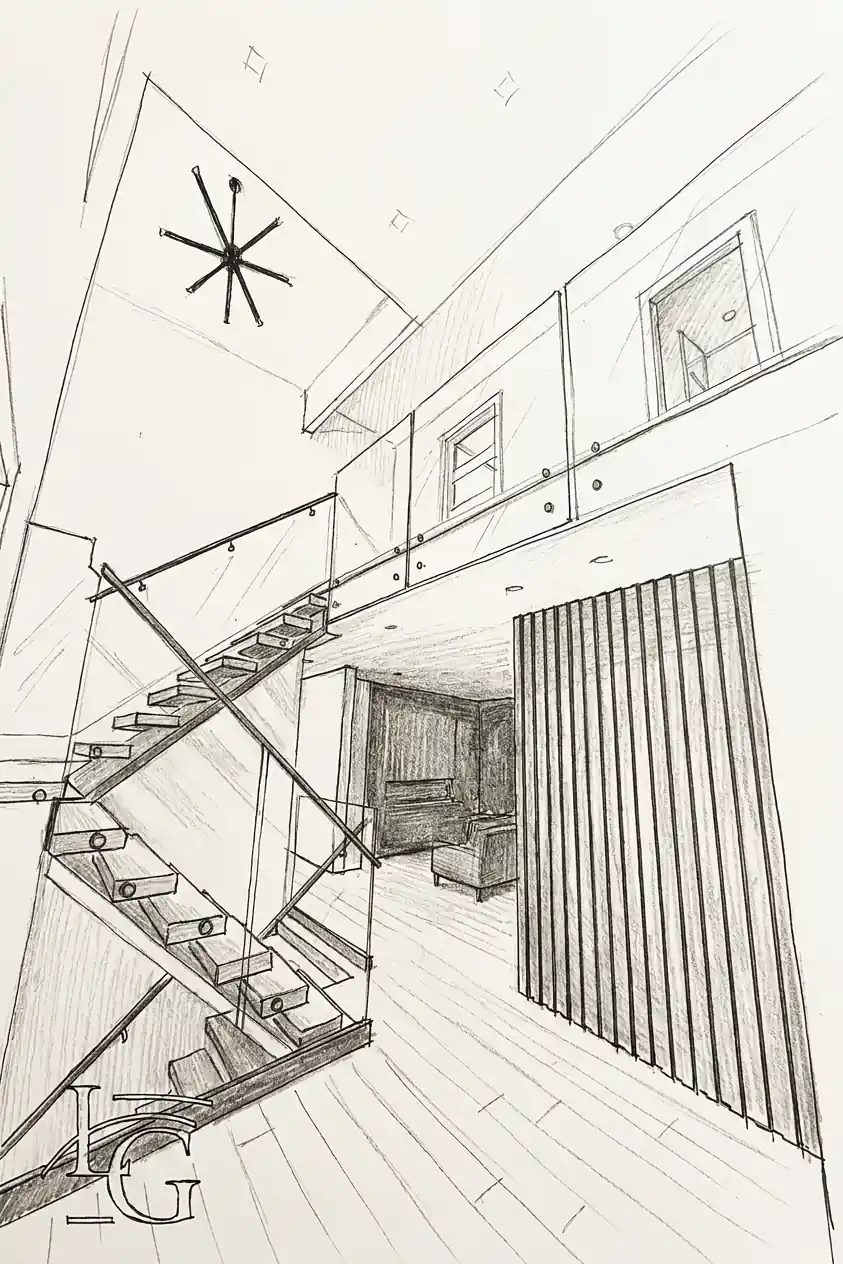
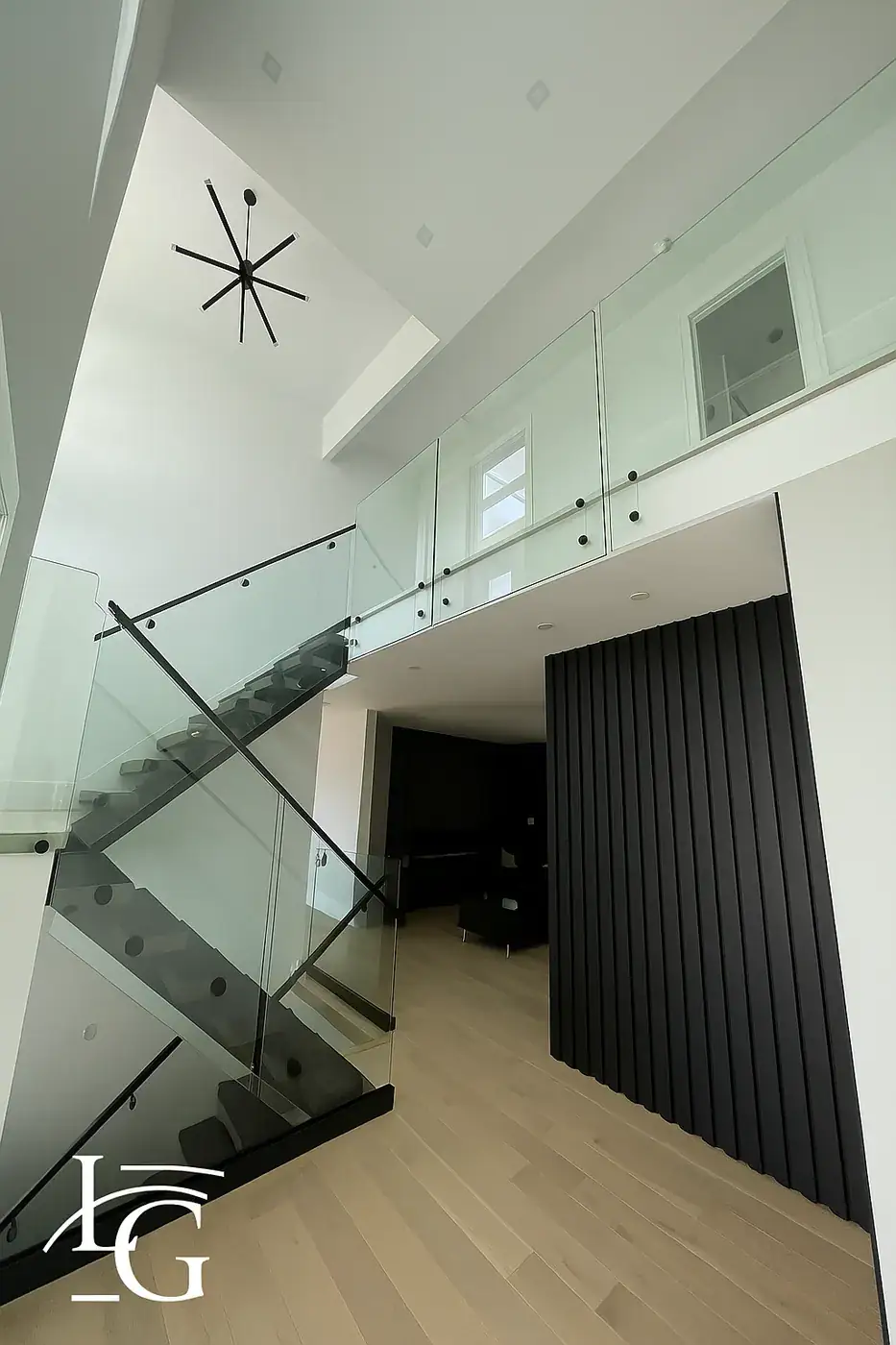
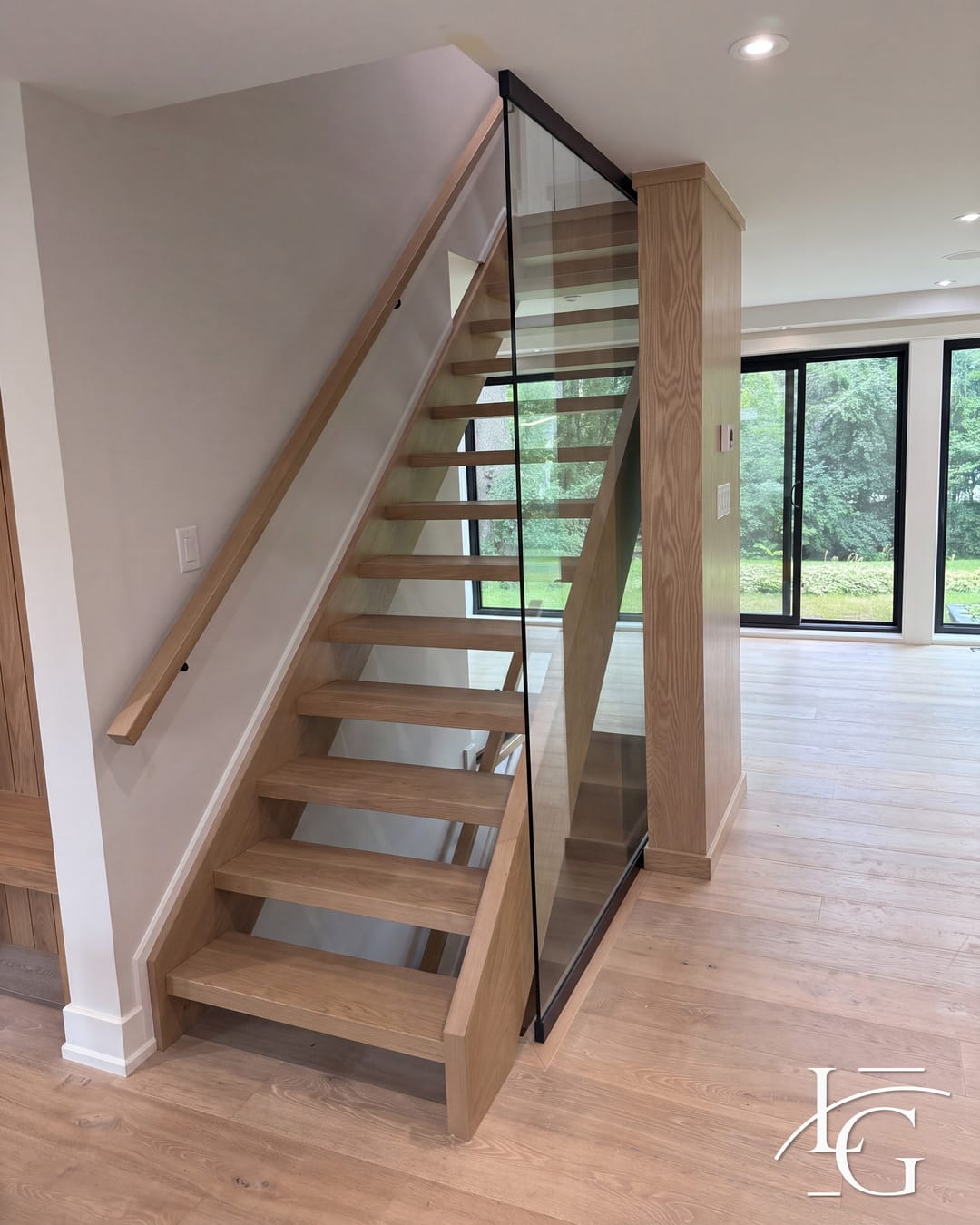
Architectural frameless glass railings for premier Oakville residences—from modern floating interior stairs in Glen Abbey to high-wind lakefront deck guards in Bronte and Old Oakville. Templated, fabricated, and installed directly by owner-operator Bojan.
Where Oakville glass railings go
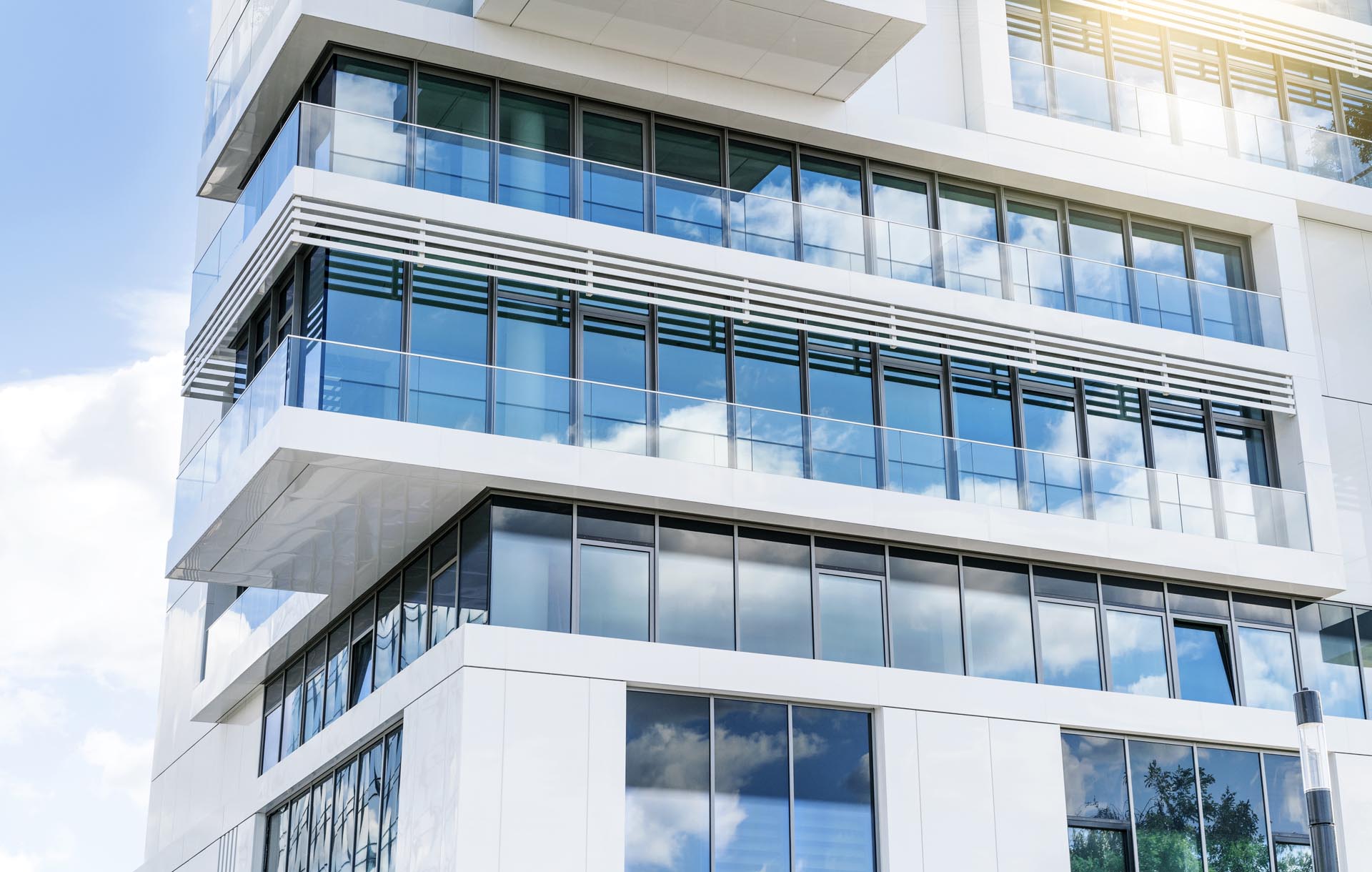
Most Oakville railing work splits roughly evenly between interior stair runs and exterior deck or balcony guards, with the exterior load concentrated south of Lakeshore in Bronte and Old Oakville where rear elevations face the lake. Glen Abbey and West Oak Trails sit at the family-renovation core — mid-cycle deck railings and feature stair retrofits on 1980s-to-early-2000s homes. Joshua Creek and the north Iroquois Ridge pockets are almost entirely late-1990s-to-mid-2010s estate stock, with long upper-hall guard runs and double-storey foyers asking for floor-to-ceiling glass.
Bronte lakefront railings need a wind-loading conversation that doesn’t come up on inland Oakville lots. Depending on the exposure category and the run length, we move from 12mm tempered to laminated tempered glass, with base-shoe embedment sized to the actual structural condition. None of that is upsell — it’s what the engineering needs.
Railing systems we install
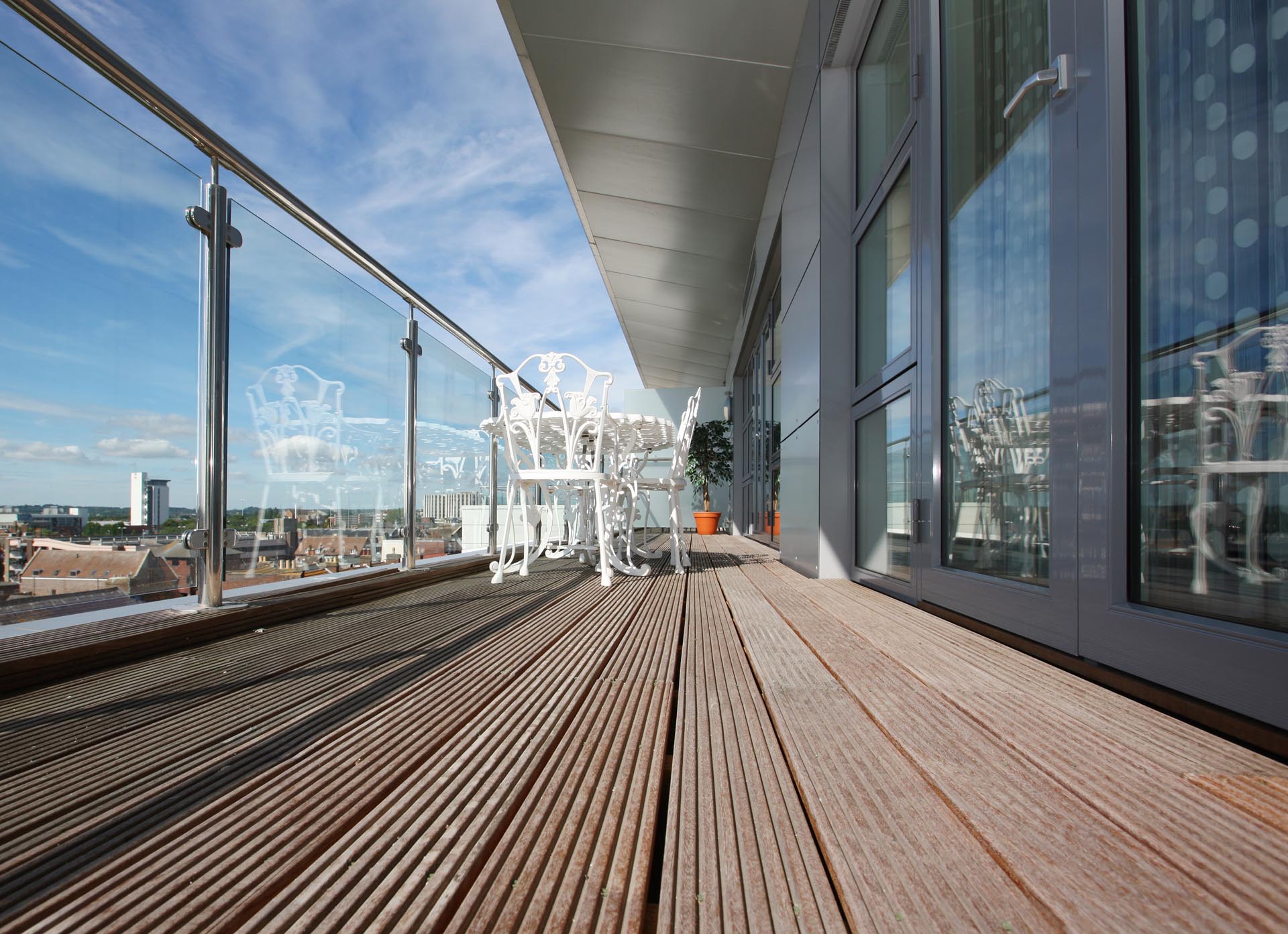
- Base-shoe (continuous): the most common Oakville deck and balcony specification. Continuous aluminum base captures the panel along its bottom edge. Cleanest line, fastest install on a finished deck.
- Standoff / point-fix: hardware grips the panel from the fascia side at intervals. Suits side-mount deck retrofits where you can’t trench the deck surface, and pool surrounds where water has to drain through the gap.
- Spigot: stainless or composite posts at intervals along the slab edge. A common Glen Abbey deck-retrofit choice when the deck framing is already finished.
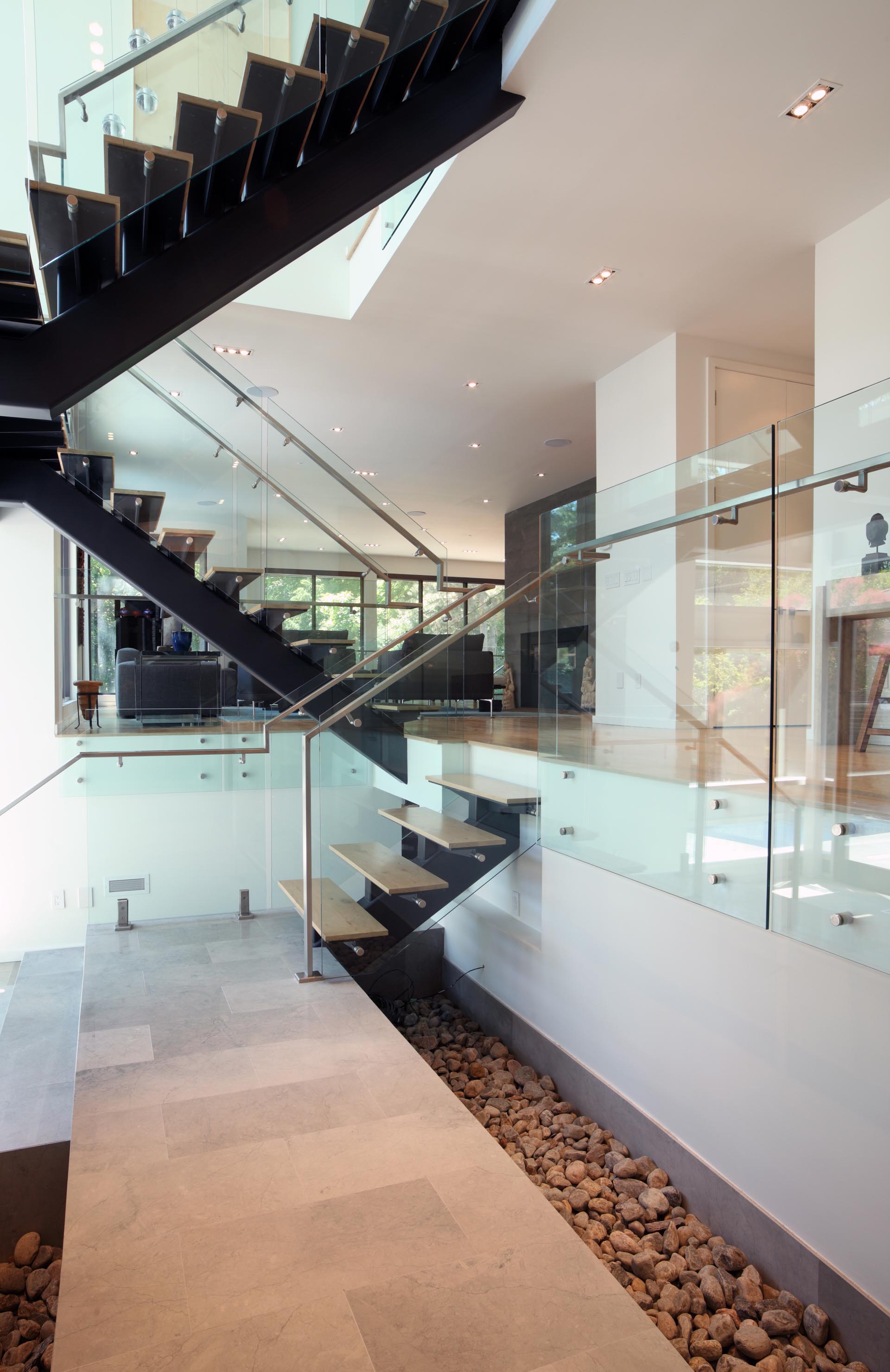
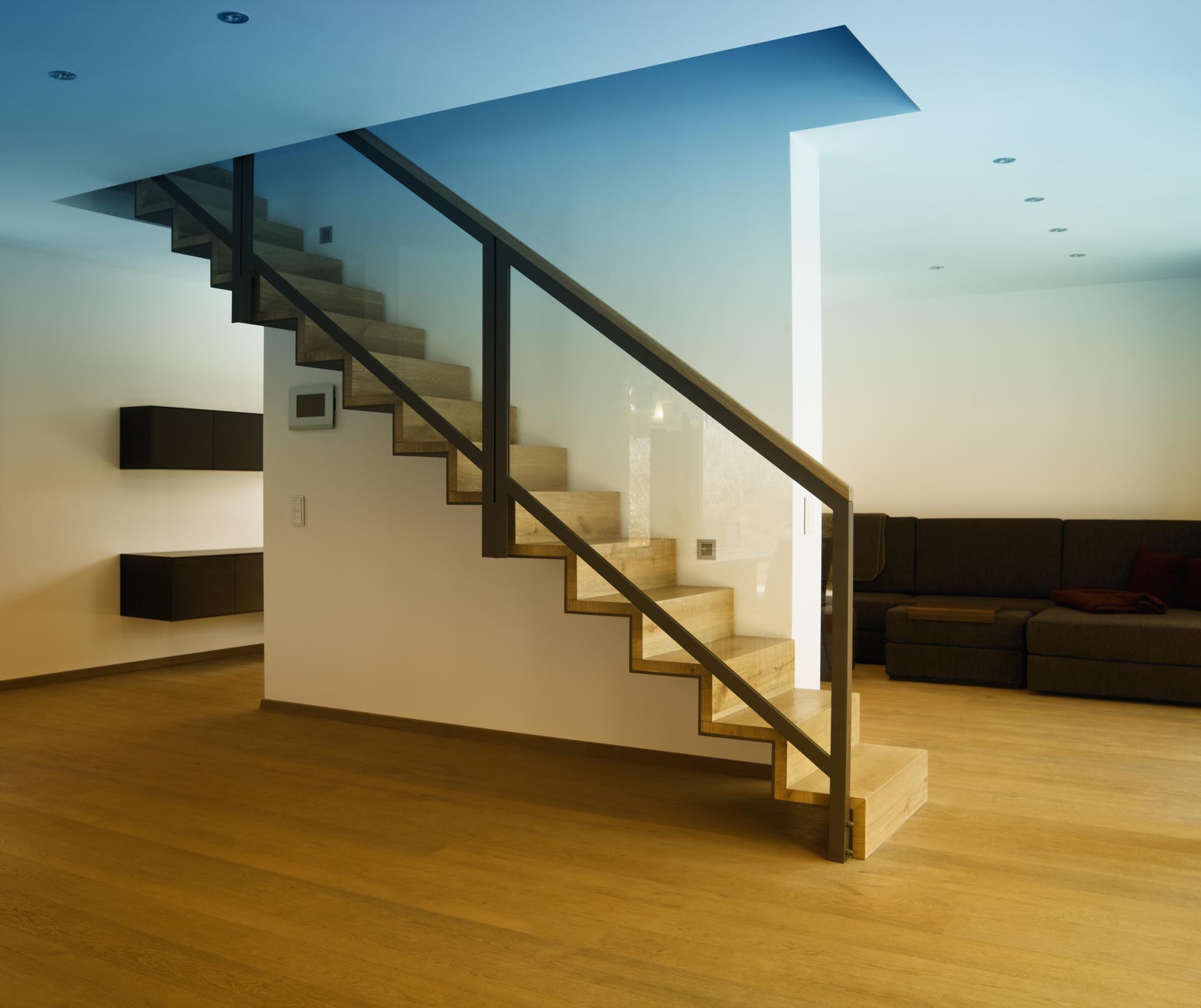
- Interior stair: base-shoe or standoff, with or without a cap rail per Ontario Building Code Division B 9.8.8 grip requirements. Joshua Creek and Iroquois Ridge upper-hall runs are typically the longest single panels we fabricate.
- Channel / dado (recessed): the glass drops into a recess cut into the deck surface, stair tread, or a site-built curb — no visible base hardware at all. The cleanest line we install, but it has to be planned before the deck or stair is finished, which makes it a new-build and major-renovation detail rather than a retrofit one.
- Post-mounted: stainless or aluminum posts carry the panels between fixed points. The right call where the structure can’t take a continuous base-shoe load, on long patio runs broken by columns, and where a client wants a handrail-forward look. Posts also bring the panel count down on big perimeter jobs.
- Glass spec: 12mm tempered glass for all railings. Starphire low-iron as an optional upgrade — removes the faint green cast on long runs, especially noticeable against white trim or marble caps.
Deck, patio, balcony, stair — how the application changes the spec
The same glass railing question lands differently depending on where it goes. A deck railing in Glen Abbey or West Oak Trails is usually a perimeter base-shoe run on a finished wood or composite deck — rectangular panels, straightforward anchoring into the rim joist or blocking. A patio railing at grade often doesn’t trigger the guard-height requirement at all, so the design can run lower and lighter — wind screening and pool-code separation are the real drivers there. A balcony guard on a Bronte or Old Oakville rear elevation is the heaviest engineering case on this page: full wind exposure, anchoring into concrete or steel rather than wood, and laminated tempered as the default spec.
Stair railings are their own trade. Panels are raked to the stair pitch — trapezoids, not rectangles — templated off the finished stringer, and the OBC’s handrail grip requirement decides whether the run gets a cap rail. Interior guards — upper halls, lofts, double-storey foyers in Joshua Creek and Iroquois Ridge — carry no wind load, so the conversation shifts from engineering to glass quality: long clear panels, polished edges, and whether Starphire low-iron is worth it against the finishes.
Engineered to Ontario Building Code
Every exterior deck or balcony guard installation gets sized against OBC Division B 9.8.8 — guard height, opening dimensions, load case, and anchor pull-out. Engineer-stamped drawings are available upon request for an additional fee. Halton municipal inspectors tend to be thorough on guard anchoring, and our base-shoe embedment details are sized to the actual structural condition, not a stock detail.
Guard heights and glass requirements at a glance
The numbers homeowners ask about most, in plain terms — all from Ontario Building Code Division B 9.8.8:
- Exterior decks and balconies more than 1,800 mm (about 6 feet) above grade: minimum guard height 1,070 mm — the 42-inch rule. This covers most second-storey decks and walkout balconies.
- Lower exterior surfaces and interior guards: minimum 900 mm (about 36 inches), including interior stair and landing guards in a house.
- Glass type: glass in a guard has to be safety glass — tempered or laminated. Annealed glass has no place in a railing, and we don’t install it. On exposed exterior spans we spec laminated tempered so a broken panel stays in place instead of leaving an open edge.
- Loads: guards carry prescribed horizontal and concentrated loads, which is what actually drives glass thickness and anchor spec — not the look.
We size every guard against these requirements at the site visit, before the quote is written.
How a glass railing project runs
- Free on-site consultation. Bojan visits to measure, walk through system options, and look at the structural condition. Typically 45-60 minutes.
- Written itemized quote within 48 hours. Glass type, hardware finish, edge work, post or base-shoe spec, and any Starphire upgrade priced as separate lines. No verbal pricing.
- Template + fabrication. We template on site once the deck, stair, or curb is finished. Glass is cut, hardware ordered, and panels fabricated to the actual template — no off-the-shelf sizes.
- Install. One or two visits depending on complexity. We protect the floors, work clean, and the railing is fully load-bearing the same day.
- 5-year warranty on labour and 5-year warranty on hardware.
What an Oakville glass railing project costs
Glass railing costs in Oakville depend on structural engineering and mounting system. Aluminum post glass railing systems start from $160 per linear foot installed. Fully frameless spigot railing systems with heavy 12mm tempered safety glass and marine-grade Duplex 2205 spigots start from $220 per linear foot installed, engineered to Ontario Building Code Division B 9.8.8. Total investment reflects footage, glass spec (12mm tempered or laminated for lakefront wind exposure in Bronte and Old Oakville), and site mounting conditions. Every quote is written as a final itemized project price within 48 hours of your site measure — direct owner-operator pricing, no subcontractor markups, backed by a 5-year warranty on labour and a 5-year warranty on hardware.
Calculate Your Project in our Build & Price Estimator →
Frequently asked questions
How much does a glass railing cost in Oakville?
Aluminum post glass railing systems start from $160 per linear foot installed. Fully frameless spigot railing systems with 12mm heavy tempered safety glass start from $220 per linear foot installed. All systems are custom laser-templated to finished surfaces and backed by a 5-year warranty on labour and a 5-year warranty on hardware with no middleman overhead.
How long does a glass railing installation take in Oakville?
From quote acceptance to a finished installation, the typical lead time is five to seven business days for residential deck or stair runs. We template on site once the deck or stair is finished, fabricate to the template, and install on a single visit for most residential projects. Larger commercial runs or projects with engineered drawings can take longer.
Do you handle Bronte and lakefront wind-loading?
Yes — that’s the conversation we lead with on every Bronte and lakefront-Old-Oakville quote. Depending on exposure and run length, the spec moves from 12mm tempered to laminated tempered glass. Base-shoe embedment is sized to the actual structural condition, and on long exposed spans we’ll add heat-soaking to reduce nickel-sulphide failure risk over the life of the railing.
What glass thickness do interior stair runs use?
Interior Oakville stair runs use 12mm tempered glass; cap-rail requirements depend on the actual layout.
Are your glass railings code-compliant?
Yes. Every exterior guard installation is sized against Ontario Building Code Division B 9.8.8 — guard height, opening dimensions, load case, and anchor pull-out. Engineer-stamped drawings are available upon request for an additional fee. Halton inspectors are notably thorough on guard anchoring.
How tall does a glass railing have to be in Oakville?
Under Ontario Building Code Division B 9.8.8: 1,070 mm (42 inches) for exterior decks and balconies more than 1,800 mm above grade, and 900 mm (36 inches) for lower exterior surfaces and interior guards such as stairs and upper halls. We confirm which case applies at the site visit — it depends on the measured height above grade, not on what the railing replaces.
How much maintenance does a glass railing need?
Less than any alternative we install against. No staining or sealing on a schedule, no rusting pickets, no loose balusters to tighten. Routine care is glass cleaner and a microfibre cloth a couple of times a year, plus a quick check of the hardware. On lakefront runs where hard-water spotting builds up, a hydrophobic coating applied at fabrication extends the time between cleanings — we’ll price it as a line on the quote if it makes sense for the exposure.
What’s the difference between a deck railing and a stair railing?
A deck railing is a level guard — rectangular panels, continuous base-shoe or posts, and on exterior runs the wind load drives the spec. A stair railing is raked to the stair pitch: each panel is a trapezoid templated off the finished stringer, and the OBC handrail grip requirement decides whether the run carries a cap rail. Stairs usually cover fewer linear feet but take more fabrication time per panel, which is why they price differently from a deck run of the same length.
How do I get a written quote?
Call 416-897-0767 or use the contact form with a few photos and rough dimensions of the deck, stair, or balcony. We’ll book a no-obligation on-site visit and send a written itemized quote within 48 hours. The whole pipeline runs from Bojan directly — there’s no sales team and no subcontractor handoff.
Related reading
- Frameless Glass Railings in Burlington (Sister City Guide)
- Top 5 Glass Railing Projects in Burlington & Oakville (Showcase)
- Ontario Building Code Requirements for Glass Railings (2026)
- Glass railings in Eastlake, Oakville
- Glass railings in Glenorchy, Oakville
- Glass railings in Lakeshore Woods, Oakville
- Pool glass railings in Morrison
Get a quote for your Oakville railing project
Call 416-897-0767 or email [email protected] for a free in-home consultation. Owner-operator install, no subcontracting, and a 5-year warranty on labour and 5-year warranty on hardware.
Adjacent cities we also serve: Burlington, Mississauga, Milton, Hamilton.